
Book Review: “Birthing Justice: Black Women, Pregnancy, and Childbirth”
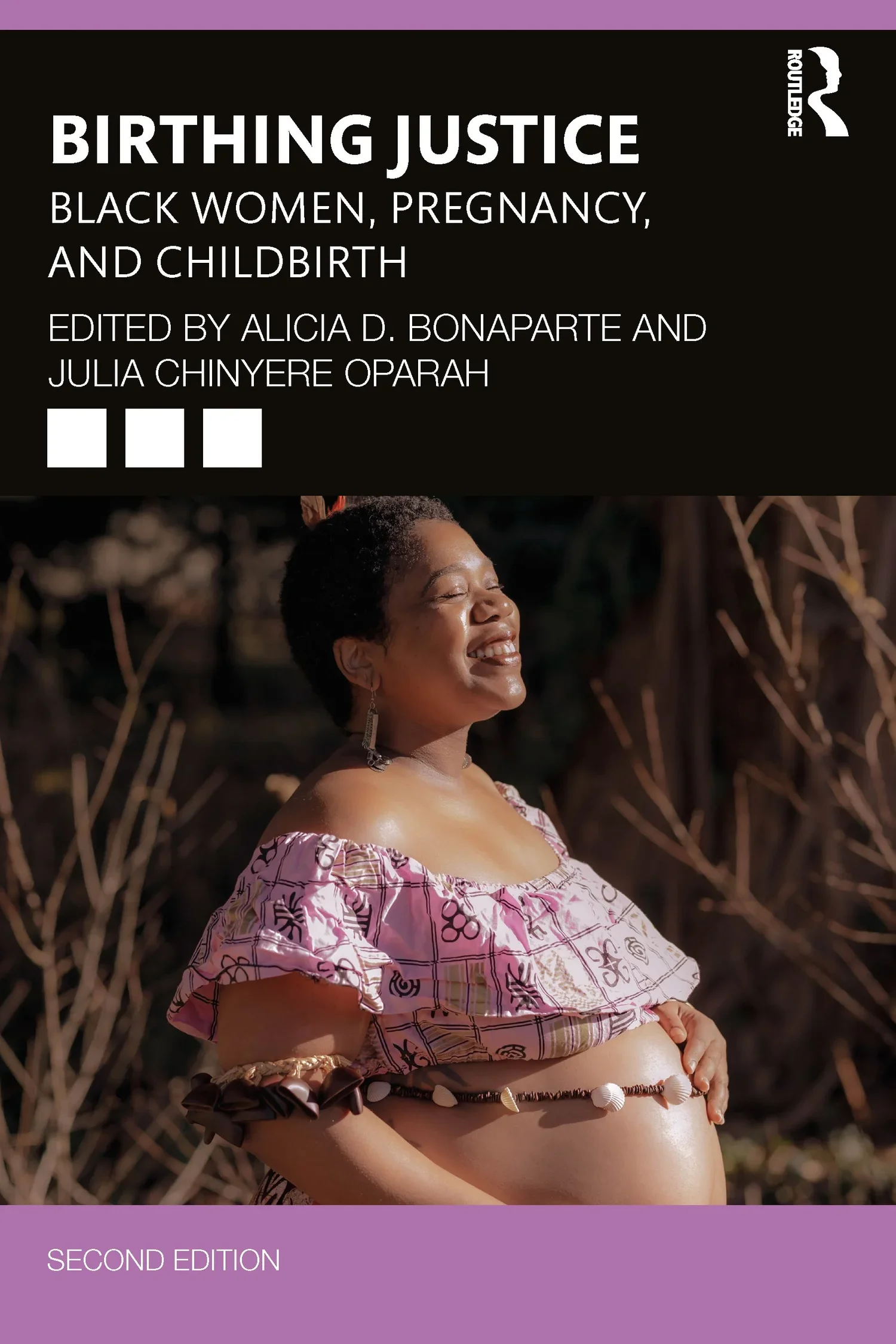
A note: This review was originally written as part of my doula certification process through BADT. I’m sharing it here because I truly believe books and resources shape the way we understand birth, parenting, and reproductive experiences. And I love highlighting resources that align with inclusive, full spectrum care!
Eye-opening, heartbreaking, and empowering all at once, Birthing Justice: Black Women, Pregnancy, and Childbirth introduces us to the systemic injustices faced by the Black birthing community- and the work being done to reclaim birth. This collection of writings paints a picture of the birth justice movement through a mix of personal story-telling, professional experiences, and historical context- all of which are necessary to understand how we got here today. Central to this anthology are the ways in which reproductive justice principles, anti-racism, and the preservation of cultural traditions can lead to birth experiences that are autonomous, empowering, and equitable.
Although the edition I read is nearly ten years old (2016), the issues highlighted are sadly still present today. Incarcerated women are still shackled during labor; parents still receive insensitive care during a loss; people living with HIV still face immense stigma; and patients still experience various forms of obstetric violence under the care of modernized healthcare providers. I was surprised to learn when the book was published, as I had naively assumed these issues were less relevant today; however, the need to publish a second edition suggests that these injustices still continue.
I was also intrigued by the editors’ notable emphasis on traditional midwifery as a path to birth justice. Throughout the book, multiple writers seemed to affirm what many birthworkers know to be true: that birth was stolen from traditional Black healers, and until reparations are made, major health disparities will continue to exist.
“Everything that I have experienced during these past seven years as a birth worker and reproductive justice advocate confirms that midwifery is a powerful tool for poor women of color who seek to free themselves of centuries of medical abuse.”
However, the editors take care to leave room for nuance. They highlight the positive experience of a mother who transferred to the hospital (chapter 12) and the efforts of some OB-Gyns to decrease their cesarean rates and promote VBACs (chapter 18). The editors’ inclusion of these experiences demonstrates the need for increased access to the full spectrum of care for Black birthing people, from homebirth midwives to trauma-sensitive OB-Gyns. All birthing people deserve to have access to all options in reproductive health; this a core tenant of reproductive justice, and this text demonstrates this well.
After reading (and re-reading some parts of) this book, I strongly feel that all white birthworkers must read this before ever working in this field. Even for those who primarily work with white clients, we cannot ignore the traumatic history that has shaped what obstetrics and gynecology is today- and this text illustrates countless examples of its lasting impacts.
Since finishing this book, I have also started reading Battling Over Birth: Black Women and the Maternal Health Care Crisis by Julia Chinyere Oparah and others at Black Women Birthing Justice (2017). So far, it has been a powerful extension of this text, detailing concrete solutions to make birth justice a reality.
Accessibility note:Birthing Justice is available for in-library use (not checkout) at the New Orleans Public Library, and as an audiobook at the Jefferson Parish Public Library.