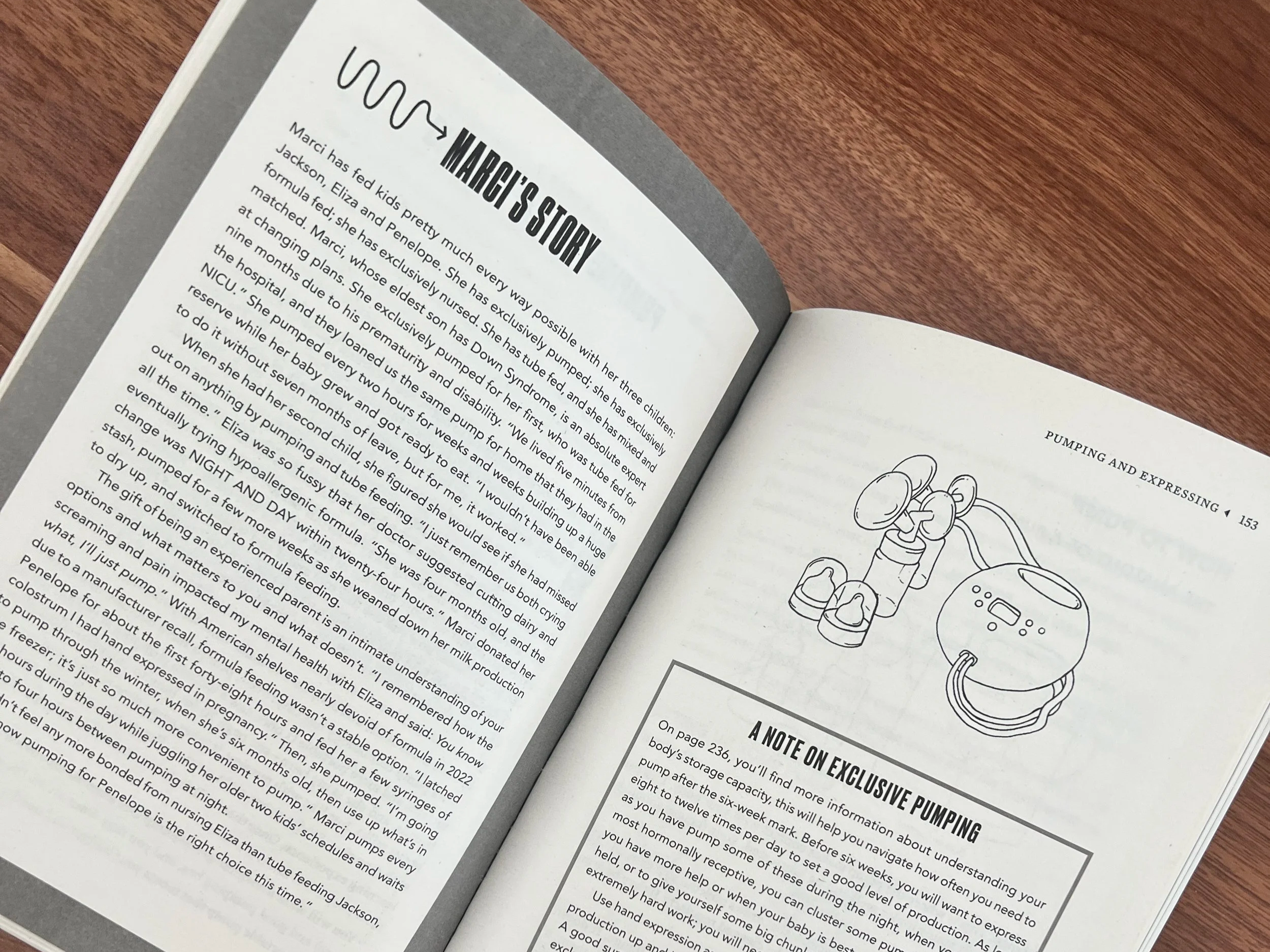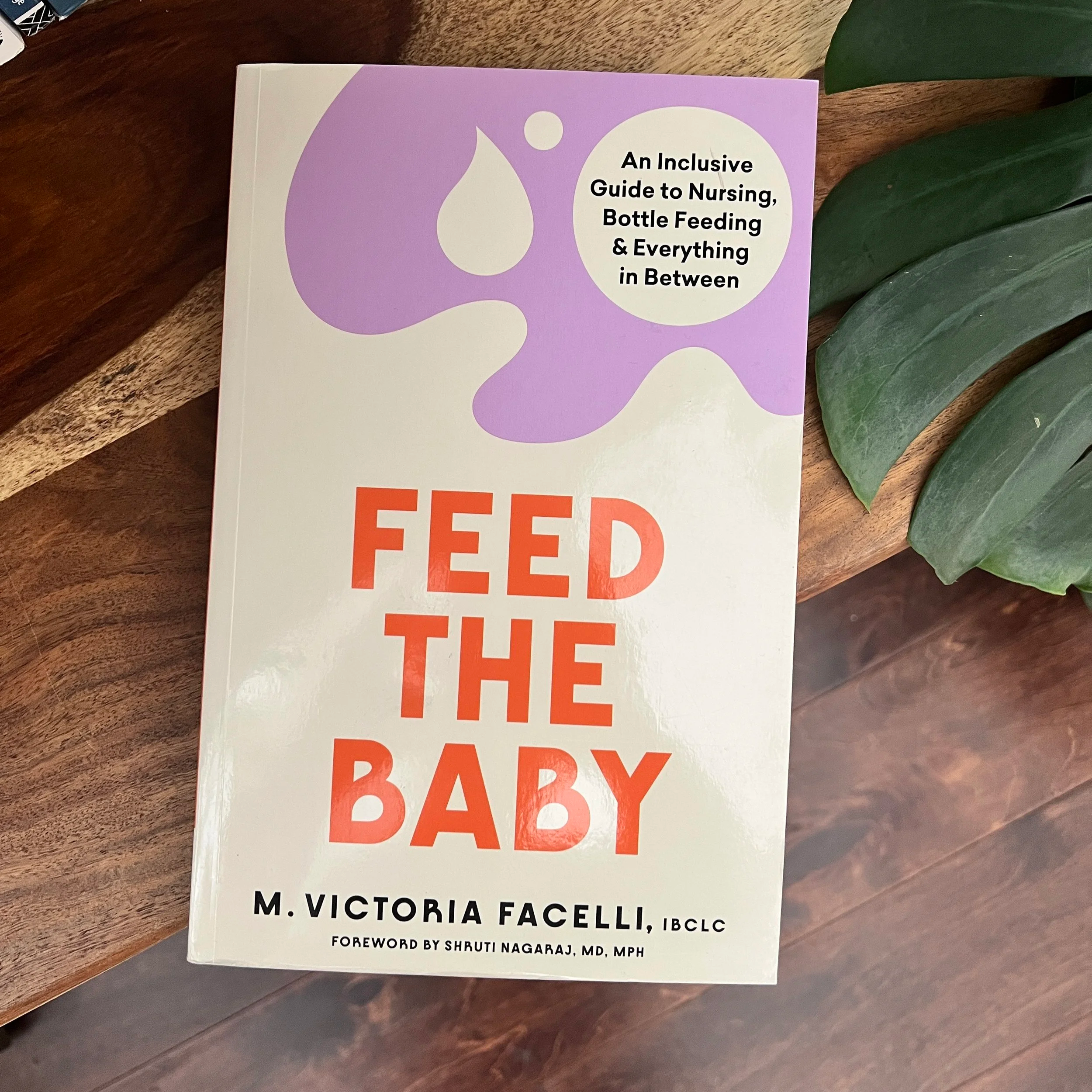
A note: This review was originally written as part of my doula certification process through BADT. I’m sharing it here because I truly believe books and resources shape the way we understand birth, parenting, and reproductive experiences. And I love highlighting resources that align with inclusive, full spectrum care!
What a hidden gem of a book! I feel like it’s been a LONG time since I’ve read a birth book that was so deeply unbiased. Feed the Baby: An Inclusive Guide to Nursing, Bottle Feeding, and Everything In Between by Victoria Facelli is proof that it’s not only possible, but necessary to approach pregnancy, birth, and postpartum through an inclusive lens. The author- an IBCLC- takes great care to affirm all feeding choices as valid, bypassing the landmine of the formula vs. human milk debate. It’s clear that this book is about feeding babies in whatever way works best for the people feeding them.
From the start, the author (who is a queer, autistic Latina woman with a disabled child) strives to be inclusive. This is so necessary in a world where texts like The Womanly Art of Breastfeeding sit on the shelves of so many birth professionals. The first chapter even opens with a statement of inclusivity- “this book is for all of us”- naming dads, trans parents, Black and brown parents, foster parents, disabled parents, grandparents, and anyone else who is feeding a baby.
“[My baby] and I aren’t in the other books on infant feeding and baby care. Disabled kids, disabled parents, queer parents, parents making really complicated choices in a really complicated world: We aren’t in there. So I wrote this book for us.”
The author effectively separates gender from infant feeding, de-emphasizing breastfeeding as a mother’s highest achievement and reframing it as simply an option that parents of any gender can utilize to meet their baby’s caloric intake needs. Every line uses language that is inclusive of all gender identities, family structures, and paths to parenthood, making no assumptions of who the reader is or how they came to be holding this book.
And while there are a wealth of books on breastfeeding, there don’t seem to be many resources available for formula-feeding families. This implies that feeding a baby with formula is simple, hard to mess up, and will never require extra support- but in reality, many parents need help understanding how to choose the right formula, when to try a different one, different bottle options, feeding schedules, and more. This book answers all of the common questions about bottle feeding, as well as trouble-shooting for when things don’t go as planned. Plus, this book is the first I’ve read that offers a truly thorough guide to understanding formula labels (that sh*t’s confusing!).
Feed the Baby is the first book I’d recommend to anyone wanting to learn more about, well… feeding babies. And it’s one of the very few that I can confidently recommend to queer and trans parents that celebrates their identities, rather than mentioning them in the “other families” chapter at the back of birth book. My only complaint about this book is that it ended- I’d be delighted to see Facelli publish more about birth, postpartum, or parenthood in the future.
Accessibility note: Feed the Baby is available for checkout in print and audiobook at the Jefferson Parish Public Library. It is not available at the New Orleans Public Library.